Relay Rivals guide
Relay Rivals is a robot strategy game you play in your web browser, with no download. You pick six robot cards, send small robots into an arena and try to break the rival's base before it breaks yours. Your robots walk and fight on their own. Your job is the plan: which card, which lane and when.
This guide explains every part of the game, with real names and numbers from the game itself. New here? Start with your first battle, step by step.
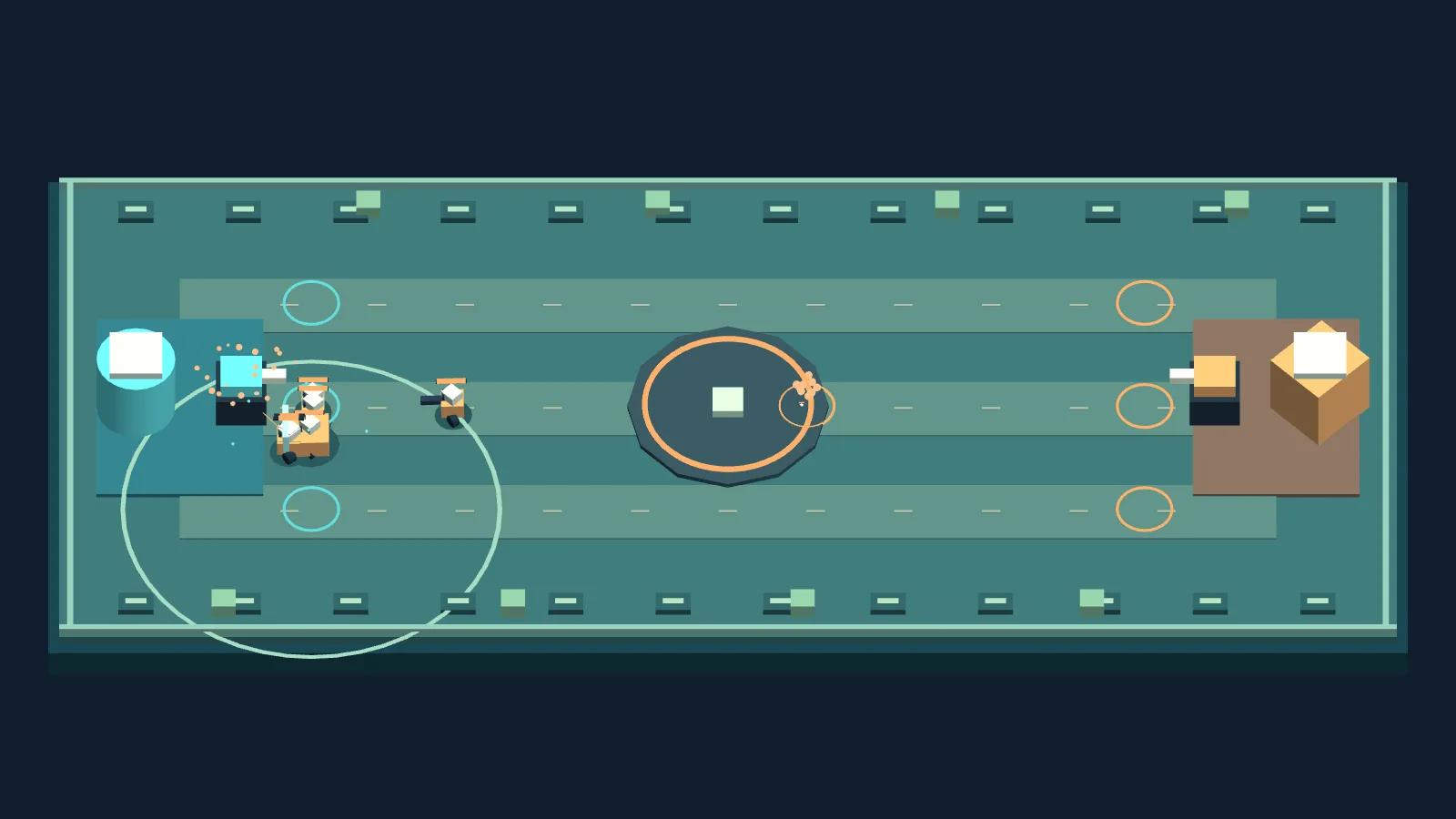
What do you do in Relay Rivals?
Every battle is short: three minutes at most. Your base is on one side of the arena and the rival's base is on the other. Each base has a Turret that shoots and a Core you must protect. In the middle is the Relay, a round pad worth fighting for.
- Pick a card. You have six cards. Each one costs Charge, which fills up by itself.
- Pick a pad. Choose one of the glowing pads A, B or C at your base.
- Watch your robots go. They walk down the lane and fight any rival robot they meet.
- Take the relay. Hold it for four seconds and a Forward pad opens near the middle.
- Break the turret, then the core. Destroy the rival's core and you win.
All the rules are on how a battle works. There are twelve robot cards, from cheap little Boltling scouts to the slow, tough Drill Walker. Every player gets the same robots with the same power. Nothing is for sale and nothing gets stronger by grinding. The title card says it simply: "Same power for everyone." Winning is about your plan.
Who is the game for?
Relay Rivals is made for kids from about 8 to 12, and for the grown-ups who play along. The text is short, and a guided lesson called Learn by playing teaches you by doing. You can lose a battle, but you never lose stars you already won. Grown-ups can read the page for grown-ups for the facts about content, saving and devices.
What is in the game?
- Campaign: twelve battles in three arenas, The Workshop, Copper Foundry and Sky Garden. Each battle gives up to three stars. See the campaign page.
- Practice battles: Training and three faster practice rivals, with nothing to lose. See game modes.
- Daily relay: a new set challenge every day, with medals to earn. See Daily relay.
- Build your crew: choose any six of the twelve cards. See building a crew.
- Bonus goals and rewards: 24 ribbons that unlock paint and decorations. See bonus goals and rewards.
- Replays: watch your last battle again and learn from it.
All battles are solo, against computer rivals called bots.
Which devices can you play on?
You play in the web browser on a computer, a phone or a tablet, like an iPad or an Android tablet. Use a mouse, only a keyboard, a game controller or touch. On a phone you hold the screen sideways. Every button is on the controls page.
How do you get the full game?
You can try Relay Rivals in your browser with the demo. The full game is part of the Contenta Games membership, which opens every game on the portal. See what a membership gives you. Your stars and crew are saved on your device, so you carry on where you stopped.
All pages in this guide
Getting started
- Your first battle, step by step: the first ten minutes, from the save slots to your first win.
- Controls: every key, mouse click, controller button and touch action.
- How a battle works: charge, pads, the relay, the turret and the core, and how you win.
- Game modes: Learn by playing, practice battles, the campaign, the Daily relay and replays.
Robots and crews
- All 12 robot cards: what every robot does and what it is good against.
- Card stats: health, damage, range, speed and recharge time for every card.
- Building a crew: the three crew ideas and how to make your own six-card crew.
Battles and rivals
- The campaign: all 12 battles: every rival crew, with a tip for each battle.
- Rival styles: how Signal keepers, Lane sprinters and Workshop wardens play, and how to beat them.
- Bonus goals and rewards: all 24 ribbons, paints and core decorations.
- Daily relay: the six daily challenges and how medals work.
Tips and help
- Tips for beginners: easy habits that win more battles.
- Advanced tips: three stars, fast wins and clever card tricks.
- Settings and saving: sound, graphics, moving effects, languages and save slots.
- FAQ: quick answers to the questions players ask most.
- For grown-ups: content, saving, devices and languages.
- Glossary: every game word explained.
More strategy games
Like planning your moves? Try the Three Marks guide for a fantasy card game, or the Squad Rush guide for fast arcade action. All our player guides are on the guides page.
Next
Read your first battle, step by step, or jump straight in and play Relay Rivals.
Start here
- Your first battle in Relay Rivals, step by step New to Relay Rivals? Follow your first ten minutes step by step: pick a save slot, play Learn by playing, win Training and start the robot campaign.
- Relay Rivals controls: touch, keyboard and controller Every Relay Rivals control: touch on a phone or tablet, mouse or keyboard only on a computer, and a gamepad. Plus pads, menus and pausing.
- How a Relay Rivals battle works: charge, relay, win The rules of a Relay Rivals robot battle: charge, cards and pads, the three lanes, capturing the relay, the turret and core, the 3-minute clock and draws.
Game modes
- Relay Rivals game modes: campaign, practice, daily, replays Every way to play Relay Rivals: the Learn by playing lesson, Training and practice battles, the 12-battle campaign, the Daily relay and battle replays.
- Relay Rivals Daily relay: all six daily challenges How the Relay Rivals Daily relay works: when it changes, how to earn three medals, and every daily challenge with its arena, both crews and its bonus goal.
Strategy tips
- Relay Rivals robots: all 12 crew cards explained All 12 robot cards in Relay Rivals: what each robot does, its charge cost, which robots stop flyers, what beats what, and tips for every card.
- Relay Rivals crew guide: build the best six-card crew How to build a Relay Rivals crew: the Balanced, Fast pressure and Heavy support crew ideas, what a good six-card crew needs, and crews for each rival.
- Relay Rivals rival styles: how the bots play and how to win How the Relay Rivals bots think: Signal keeper, Lane sprinter and Workshop warden styles, what each one does with its cards, and the best plan against each.
- Relay Rivals tips for beginners: win more robot battles Easy Relay Rivals tips for kids and grown-ups: pair your robots, spend charge well, take the relay, stop flyers and rockets, and learn from replays.
- Relay Rivals advanced tips: three stars and fast wins Advanced Relay Rivals strategy: how to get three stars, win in under 1:40, use the forward pad, place support cards, escort Drill Walkers and read the bots.
Lists and facts
- Relay Rivals card stats: health, damage, range, speed Exact stats for all 12 Relay Rivals robot cards: charge cost, health, damage per hit, time between hits, range, speed, recharge time and special rules.
- Relay Rivals glossary: every game word explained What the words in Relay Rivals mean: charge, crew, relay, forward pad, turret, core, bot, ribbon, deployments, flyers and more, in plain words.
Levels and missions
- Relay Rivals campaign: all 12 battles and how to win All 12 Relay Rivals campaign battles in The Workshop, Copper Foundry and Sky Garden: rival crews and styles, how fast each rival plays, stars and tips.
Guides
- Relay Rivals bonus goals, ribbons, paint and decorations All 24 bonus goals in the Relay Rivals campaign, how to earn every ribbon, and how to unlock all six crew paints and both core decorations.
Questions and answers
- Relay Rivals settings and saving: sound, graphics, slots Relay Rivals settings explained: volume, music, moving effects, graphics and nine languages, plus how saving and the three save slots work.
- Relay Rivals FAQ: questions and answers Answers about Relay Rivals, the robot strategy game: how to play, devices and controllers, saving, ads, age, the relay, stars, flyers and the Daily relay.
For grown-ups
- Relay Rivals for parents: what the robot game is like Facts for parents about Relay Rivals: what kids do in this robot strategy game, content notes, reading, session length, saving, devices, languages and ads.


